A biogas plant is an innovative and environmentally friendly way to convert organic waste into useful energy. It helps reduce the environmental impact of waste while creating opportunities for the production of electricity and heat. In this article, we will explore the working principles of a biogas plant and the main stages of the process.
What Is a Biogas Plant?
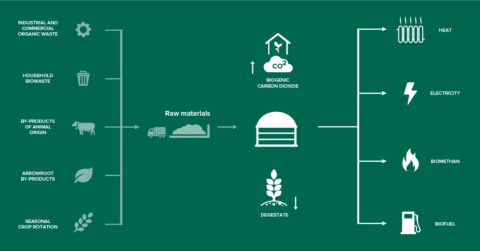
A biogas plant is specialized equipment that uses the process of anaerobic digestion of organic materials (such as food waste, agricultural products, animal manure, or other biological waste) to produce biogas. As a result of this process, methane — the main component of biogas — is generated, which can then be used to produce electricity, heat, or even serve as fuel for transport.
Stages of Biogas Plant Operation
- Preparation and Loading of Biomass
The first stage involves preparing the organic waste that is fed into the biogas plant. Depending on the type of biomass (food waste, manure, other organic materials), pre-processing such as shredding or mixing may be required. This is important to ensure the material is uniform, which promotes a more efficient digestion process.
- Anaerobic Digestion Process
The core process in a biogas plant is anaerobic digestion — the breakdown of organic materials by bacteria in the absence of oxygen. In special sealed tanks (digesters), bacteria decompose organic matter, producing biogas mainly composed of methane and carbon dioxide.
This process occurs in several stages:
- First stage: Bacteria break down carbohydrates into simpler compounds.
- Second stage: Acidogenic bacteria convert organic components into organic acids, hydrogen, and ammonia.
- Third stage: Organic acids are transformed into even simpler compounds.
- Fourth stage: Methanogenic bacteria finally convert these compounds into methane and carbon dioxide.
- Biogas Production and Utilization
The biogas produced during digestion is stored in special tanks. Since its main component is methane, it can be used for generating electricity, heating, or even upgraded into biomethane, which serves as a renewable substitute for natural gas for domestic use or transport.
- Digestate Processing
After digestion, the remaining organic matter, called digestate, is rich in nutrients and can be used as a fertilizer for agricultural needs. Thus, a biogas plant not only reduces the volume of waste but also transforms it into valuable products.
Advantages of Biogas Plants
- Environmental Sustainability: The use of biogas helps to reduce greenhouse gas emissions, such as methane, which would otherwise be released into the atmosphere from decomposing organic waste in landfills.
- Renewability: Biogas is a renewable energy source that helps decrease dependence on fossil fuels.
- Energy Efficiency: Biogas plants can provide energy for local communities or even businesses, reducing energy costs.
- Waste Management: The process allows for the efficient recycling of organic waste, preventing it from ending up in landfills and polluting the environment.
A biogas plant is not only a source of clean energy but also an effective tool for managing organic waste. It helps reduce greenhouse gas emissions, recycle waste, and supply energy for farms, communities, and businesses.